 ultimate-guide
How to Meal Plan Effectively: A Step-by-Step Guide
Table of Contents
- Why Meal Planning Works (and Where Most Plans Fall Apart)
- The Meal Planning Steps That Actually Stick
- Building a Weekly Meal Plan for Family Life
- Budget Meal Planning: Cutting Grocery Costs Without Cutting Flavor
- Meal Planning Templates: Paper, Digital, or App
- Adjusting Portions, Nutrition, and Picky Eaters
- Food Safety, Storage, and Leftover Timelines
- When the Week Goes Sideways: Flexible Planning That Survives Chaos
- Frequently Asked Questions
Last Updated: October 21, 2026
Why Meal Planning Works (and Where Most Plans Fall Apart)
A weekly meal plan works because it moves decisions from 6 p.m. on a Tuesday to a calm Sunday afternoon. That shift is the whole point.
At Saltwater Mom Life, we build plans around prep, not perfection.
Where most plans fail is the fantasy version. Someone plans seven brand-new recipes, shops for all of them, and abandons the list by Wednesday.
The Meal Planning Steps That Actually Stick
The practical sequence is inventory first, calendar second, meals third, grocery list last. Doing it in that order means you buy only what you'll actually cook, and you cook what fits the week you actually have.

Step 1: Take Inventory of the Refrigerator, Freezer, and Pantry
Start with a five-minute sweep. Open the refrigerator, freezer, and pantry and write down what needs using first. Check dates on dairy, produce, and leftovers. Note the proteins in the freezer and the half-bags of grains and frozen vegetables in the pantry.
This step does two jobs at once. It reduces food waste, and it cuts your grocery bill because you're building meals around ingredients on hand instead of buying duplicates.
Step 2: Check the Calendar Before Choosing Meals
Look at the week before you pick a single recipe. Mark late work nights, kids' activities, appointments, and any evening you know you'll be wiped out. Those are your low-effort nights, and they get the simplest meals: leftovers, sheet-pan dinners, or something already in the freezer.
Match cooking effort to available energy, not to ambition. A week with three busy evenings needs three low-effort meals, and planning anything more elaborate is how plans collapse.
Step 3: Pick Meals and Build the Grocery List
Choose meals in a rotation: a few reliable family favorites, one or two new recipes, and at least one leftovers night. Then build the grocery list directly from the recipes, organized by store section so you're not doubling back through the aisles.
| Planning Step | Time Needed | Frequency | Main Payoff |
|---|---|---|---|
| Refrigerator, freezer, pantry inventory | 5-10 minutes | Weekly | Less food waste, fewer duplicate buys |
| Calendar check | 5 minutes | Weekly | Realistic effort levels per night |
| Choosing meals | 15 minutes | Weekly | Fewer weeknight decisions |
| Building the grocery list | 10 minutes | Weekly | One organized shopping trip |
A Complete Worked Example: From Inventory to Shopping List
Here is how the four steps translate into an actual week. Assume a household of two adults and one child, with three busy evenings (Tuesday, Wednesday, Thursday).
Inventory on hand:
- Freezer: 1 lb ground turkey, 1 lb chicken thighs, half a bag of frozen peas, half a bag of frozen spinach
- Refrigerator: half a carton of eggs, a block of cheddar, a partial jar of salsa, two carrots, one bell pepper
- Pantry: 1 lb dried pasta, a can of black beans, a can of diced tomatoes, rice, tortillas, a partial jar of peanut butter
Calendar: Tuesday and Wednesday are late work nights; Thursday is a school event. Those three nights get low-effort meals.
Meals chosen (five dinners, plus leftovers):
- Monday, Turkey and black bean tacos (uses ground turkey, black beans, salsa, tortillas, cheddar)
- Tuesday (busy), Leftovers from Monday
- Wednesday (busy), Pasta with diced tomatoes and frozen spinach (uses pasta, canned tomatoes, spinach, cheddar)
- Thursday (busy), Sheet-pan chicken thighs with carrots and bell pepper (uses chicken, carrots, pepper)
- Friday, Fried rice with eggs, frozen peas, and leftover chicken
- Saturday, Use-it-up night: whatever remains, plus pantry rice
Grocery list built from the recipes (organized by store section):
- Produce: onions, garlic, one lemon, one head of lettuce
- Dairy: one dozen eggs, one block of cheddar (to replace what's used)
- Protein: none (freezer covers it)
Notice what did not get bought: no duplicate proteins, no extra frozen vegetables, no second jar of salsa.
Step 4: Prep Once, Then Execute
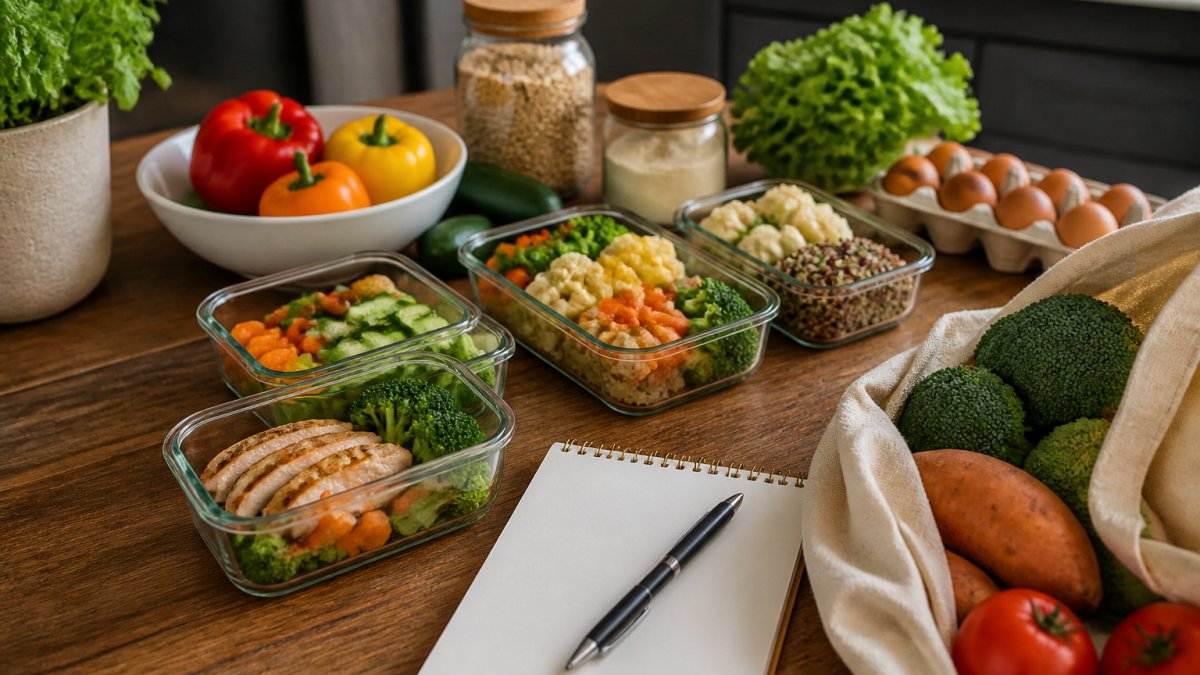
Before the week starts, block 60-90 minutes for prep: cook a grain, chop vegetables, portion proteins, and assemble anything that keeps. This is the step that makes busy nights work. Prep is not a separate project, it is the bridge between the plan and the week.
Building a Weekly Meal Plan for Family Life
A weekly meal plan for family life has to account for more than hunger.
Keep breakfast and lunch simple and repeatable. Most families do better with two or three rotating breakfast options and a standard lunch formula than with a fresh plan for every meal.
Our prep-focused digital meal plans include curated recipes and an organized shopping list. This approach leads to fewer decisions, less waste, and a kitchen routine that holds up on a Wednesday.
Budget Meal Planning: Cutting Grocery Costs Without Cutting Flavor
Budget meal planning works by planning around sales, seasonal produce, and bulk buying, then letting those deals decide part of the menu.
Buying in bulk saves money only when you'll use it. Split family-size packs into meal-size portions and freeze them the day you shop.
Plan one deliberate leftovers night and one "use-it-up" meal each week. That combination alone tends to shrink grocery waste noticeably, and it keeps the food budget predictable.
Meal Planning Templates: Paper, Digital, or App
The best meal planning template is the one you'll actually open on a busy Sunday. Paper works for households that like a visible plan on the fridge. Digital templates and spreadsheets suit anyone who shops from a phone.
We recommend a simple format: a grid with days across the top and breakfast, lunch, dinner, and prep notes down the side. The USDA's food and nutrition guidance is a useful reference when you're building balanced meals into that template.
Adjusting Portions, Nutrition, and Picky Eaters
Portion and nutrition adjustments start with the plate, not a separate meal. Build balanced meals from a protein, a vegetable, and a starch, then adjust the ratio per person. The plate method is the most accessible way to do this without weighing food or counting macros.
A Practical Plate Method
For most adults, a balanced dinner plate is roughly:
- One quarter protein (about the size of your palm)
- One quarter starch (about the size of your cupped hand)
- One half vegetables (about the size of your two cupped hands together)
These are estimates, not prescriptions. The point is the ratio, not the precision. A child's plate uses the same ratio at roughly half the total volume. A very active adult or a pregnant person may need more starch and protein; an adult managing weight may lean heavier on vegetables and protein. Adjust the ratio per person at the table rather than cooking separate meals.
Translating Nutrition Goals into the Plan
If you have a specific goal, more fiber, more protein, less added sugar, handle it at the planning stage, not at dinner. Note the goal on the template and let it shape which recipes you choose. For example:
- More fiber: plan beans, lentils, whole grains, and vegetables into at least four dinners
- More protein: anchor each dinner with a palm-sized protein and add a protein to breakfast (eggs, Greek yogurt)
- Less added sugar: plan breakfasts around oats or eggs instead of sweet cereal
This is where the plan earns its keep. A goal written on a template becomes a grocery list, and a grocery list becomes the default. A goal held only in your head competes with whatever is in the refrigerator at 6 p.m.
Handling Picky Eaters Without Cooking Twice
For picky eaters, plan one "safe" item at every dinner and serve new foods alongside it without pressure. Repeated exposure works better than negotiation. A common pattern is to serve the new food in a small portion next to the safe food, and let the child decide whether to try it. The plan does not change; only the portion on the child's plate does.
Dietary Restrictions and Swaps
Dietary restrictions get handled at the planning stage: note them on the template so the grocery list reflects them automatically, and keep a short list of swaps that you buy on every trip. Common swaps include gluten-free pasta, dairy-free milk, and a plant-based protein for one night a week. Keeping the swaps on a standing list means you are not re-deciding them every week.
Food Safety, Storage, and Leftover Timelines
Leftovers are a core part of a working meal plan, and they need a timeline. Cool cooked food promptly, refrigerate it within two hours, and label containers with the date.
Follow the FDA's refrigerator and freezer storage guidance for specific storage times on meat, poultry, and prepared foods, and check the USDA FoodSafety.gov leftovers guidance when you're unsure about a specific item.
When the Week Goes Sideways: Flexible Planning That Survives Chaos
Flexible planning means building slack into the plan on purpose. Leave one night unassigned every week.
This is the answer to the most common objection we hear: planning on Sunday and ordering pizza by Wednesday.
Meal planning effectively isn't about a perfect chart. It's about a small, repeatable routine that starts with what you have, respects your calendar, and bends when life does.
Frequently Asked Questions
What are the steps to meal planning effectively?
Start with inventory: check the refrigerator, freezer, and pantry so you know what ingredients on hand need using. Next, check your weekly schedule for busy nights and plan low-effort meals on those days. Choose five to seven dinner ideas, build a grocery list from the gaps, and shop once. Add a buffer night for leftovers or takeout. Review the plan midweek and rotate meals you repeat often into a meal rotation so planning gets faster each week.
How do I make a weekly meal plan for my family?
A weekly meal plan for family life works best when it accounts for real schedules. Sit down once a week, list activities and late work nights, and assign simple meals to those days. Ask each family member for one meal idea to build buy-in. Plan breakfast options and lunch ideas in bulk, then plan dinners around shared ingredients so nothing spoils. Keep the plan visible on the refrigerator so everyone knows what's coming.
How can I meal plan on a budget?
Budget meal planning starts with what you already own. Inventory the pantry, refrigerator, and freezer, then plan meals around ingredients on hand before buying anything new. Check weekly sales and plan around seasonal produce, which is usually cheaper. Buy staples in bulk and use batch cooking so one protein stretches across two or three meals. A written shopping list built from your plan is the single biggest defense against impulse spending.
How far ahead should I plan meals?
One week is the sweet spot for most households. A seven-day plan is long enough to shop once and short enough to adjust when schedules change. Plan two to three weeks ahead only for freezer meals or batch cooking. Anything longer tends to collapse when life happens. Keep a running list of meal ideas so future planning takes minutes instead of starting from a blank page.
What should I include on a meal-planning grocery list?
Build the list directly from your meal plan, organized by store section: produce, dairy, meat, pantry, frozen. Note quantities so you don't overbuy perishable foods. Check pantry inventory first so you skip items you already have. Add household needs like paper towels separately. A section-organized shopping list means one pass through the store instead of backtracking, which saves both time and money.
How do I handle meal planning when my schedule changes?
Build flexibility into the plan from the start. Leave one night open each week for leftovers or a low-effort backup meal. Keep two or three freezer meals on hand for unexpected chaos. If a night falls apart, move that meal to next week rather than abandoning the whole plan. The goal is a system that bends, not one that breaks the first time something comes up.
Can I use meal planning templates instead of an app?
Yes, and many families prefer them. Meal planning templates range from a printed weekly grid on the refrigerator to a simple spreadsheet. Paper works well because it's visible and requires no subscription. Digital templates sync across phones for shared households. The best template is the one you'll actually use every week, so try a simple paper version first before committing to anything more complex.
Decision fatigue is the real enemy of weeknight dinners, and a flexible plan is the fix. Saltwater Mom Life builds budget-friendly, prep-focused digital meal plans with curated recipes and organized shopping lists, so you start from a plan instead of a blank page. Our weekly guides are designed to save time, manage your food budget, and simplify meal prep for busy families. Get started with Saltwater Mom Life and turn Sunday's planning into a week of calmer dinners.