 how-to
Flexible Meal Plans for Busy Moms That Actually Work
Last Updated: October 25, 2026
Quick Summary
Flexible meal plans are weekly dinner frameworks that let you swap nights, skip a recipe, or repeat a favorite without breaking the system. Build yours in about 10 minutes: pick five dinners from a rotation of 8-10 family favorites, leave two nights open, and check your kitchen before shopping.
- Mark your three busiest evenings on the calendar and assign the fastest meals to them.
- Keep your dinner rotation to 8-10 meals your family already eats to avoid extra decisions.
- Check your fridge, freezer, and pantry before planning to cut food waste and grocery spending.
- Light batch cooking, one protein, one grain, two chopped vegetables, makes three weeknights easier.
- Prep only what you'll eat within four days to avoid wasting food by Thursday.
Table of Contents
- Why Flexible Meal Plans Beat Rigid Schedules for Busy Moms
- The Weekly Meal Plan for Busy Families: A 10-Minute Routine
- Check Your Fridge, Freezer, and Pantry Before You Plan
- Meal Prep for Busy Moms: Batch Cooking and Advance Preparation
- Quick Dinner Ideas for Families When the Schedule Changes
- Use a Meal Planning Printable to Build Your Shopping List
- Make Your Flexible Meal Plan Work for Picky Eaters and Dietary Needs
- Start Your First Flexible Meal Plan This Week
- Frequently Asked Questions
Why Flexible Meal Plans Beat Rigid Schedules for Busy Moms
Flexible meal plans are weekly dinner frameworks that let you swap nights, skip a recipe, or repeat a favorite without breaking the system.
A rigid plan fails the first time a child gets sick or a meeting runs late. Then guilt sets in, and the drive-thru wins.
We build every weekly guide around this idea: plan the week, not the day.
Here's what most guides get wrong. They hand you seven locked-in dinners and call it a plan. That's a wish list, not a system. Real meal planning for busy families needs three things:
- A short rotation of dinners your family already likes
- Built-in swap options for chaotic nights
- One shopping list that covers every version of the week
If you want the full method, our guide on how to meal plan effectively walks through it step by step.
The Weekly Meal Plan for Busy Families: A 10-Minute Routine
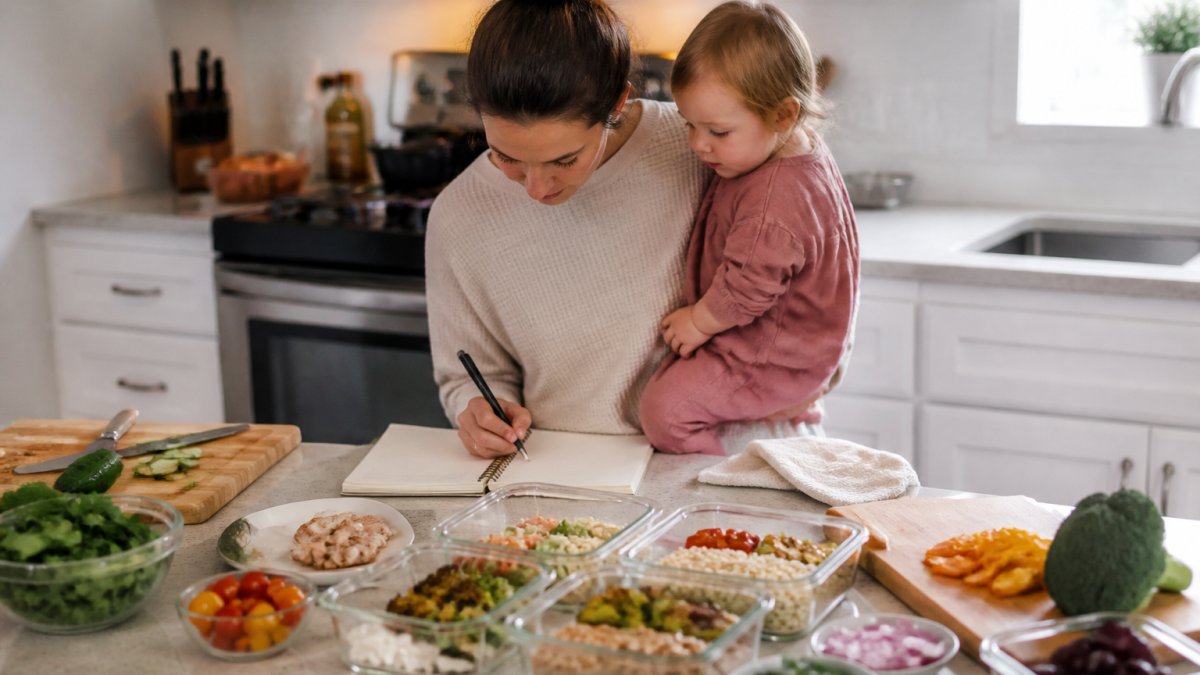
A weekly meal plan for busy families takes about 10 minutes when you follow a fixed routine. The trick is doing the same steps in the same order every week, so the decision-making gets easier over time.

Here's the routine we recommend:
- Open your calendar and mark the three busiest evenings
- Pick five dinners from your rotation, leaving two nights open
- Assign the fastest meals to the busiest days
- Check what you already own before adding anything to the list
- Write the grocery list in store-aisle order
That's it. Ten minutes, once a week. Many moms find that Sunday evening or Monday morning works best, but any consistent slot will do.
What the 10 minutes actually looks like
The steps sound simple, but the value is in the time math. Here's a realistic breakdown for a household of four:
- Minutes 0-2: Open the calendar. Mark Tuesday (late meeting), Thursday (soccer practice), and Friday (kids' sleepover). Those are your three "fast" nights.
- Minutes 2-5: Pick five dinners from your rotation. Write them in pencil, not pen. Leave Saturday and Sunday blank on purpose, those are your open nights.
- Minutes 5-7: Assign the fastest meals to Tuesday, Thursday, and Friday. A 15-minute quesadilla night belongs on the soccer-practice evening, not the calm Sunday.
- Minutes 7-9: Walk to the fridge, freezer, and pantry. Cross off any ingredient you already own. This is the step most people skip, and it's the one that saves the most money.
- Minutes 9-10: Write the grocery list in store-aisle order: produce, meat and seafood, dairy, center aisles, frozen. You'll shop faster and forget less.
A worked example
Say your rotation includes tacos, sheet-pan chicken and vegetables, pasta with jarred sauce, breakfast-for-dinner, and a rice bowl. Your week might look like this:
| Night | Plan | Why |
|---|---|---|
| Monday | Sheet-pan chicken and vegetables | Hands-off, 35 minutes |
| Tuesday | Breakfast-for-dinner | 15 minutes, no oven |
| Wednesday | Tacos | Uses ground turkey already in the freezer |
| Thursday | Quesadillas (swap from rice bowls) | 10 minutes, uses leftover taco filling |
| Friday | Pasta with jarred sauce | 20 minutes, pantry-based |
| Saturday | Open | Leftovers or takeout |
| Sunday | Open | Whatever the week left behind |
Notice what happened: Thursday's rice bowl became quesadillas because the taco filling was already cooked. That's the swap column doing its job. The plan didn't fail, it flexed.
If you want the full method, our guide on how to meal plan effectively walks through it step by step.
Check Your Fridge, Freezer, and Pantry Before You Plan
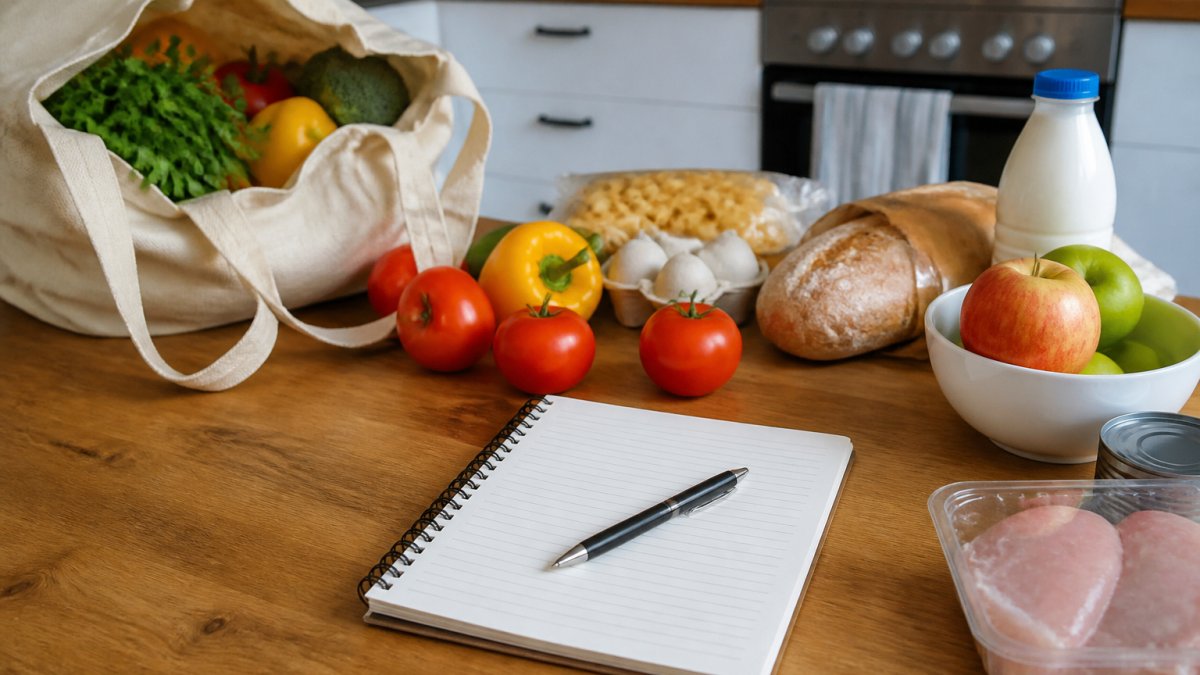
Before you choose a single dinner, check your fridge, freezer, and pantry. This one step cuts food waste and grocery spending more than any coupon ever will.
Most households already own the base of two or three meals. Half a bag of rice. Frozen chicken. A can of beans. Build the week around those first.
A quick inventory scan takes two minutes:
- Fridge: what needs eating in the next three days?
- Freezer: what proteins are already stocked?
- Pantry: what grains, cans, and jars are open?
Plan the perishables into your earliest dinners. Then fill the rest of the week with meals built on what you found.
Meal Prep for Busy Moms: Batch Cooking and Advance Preparation
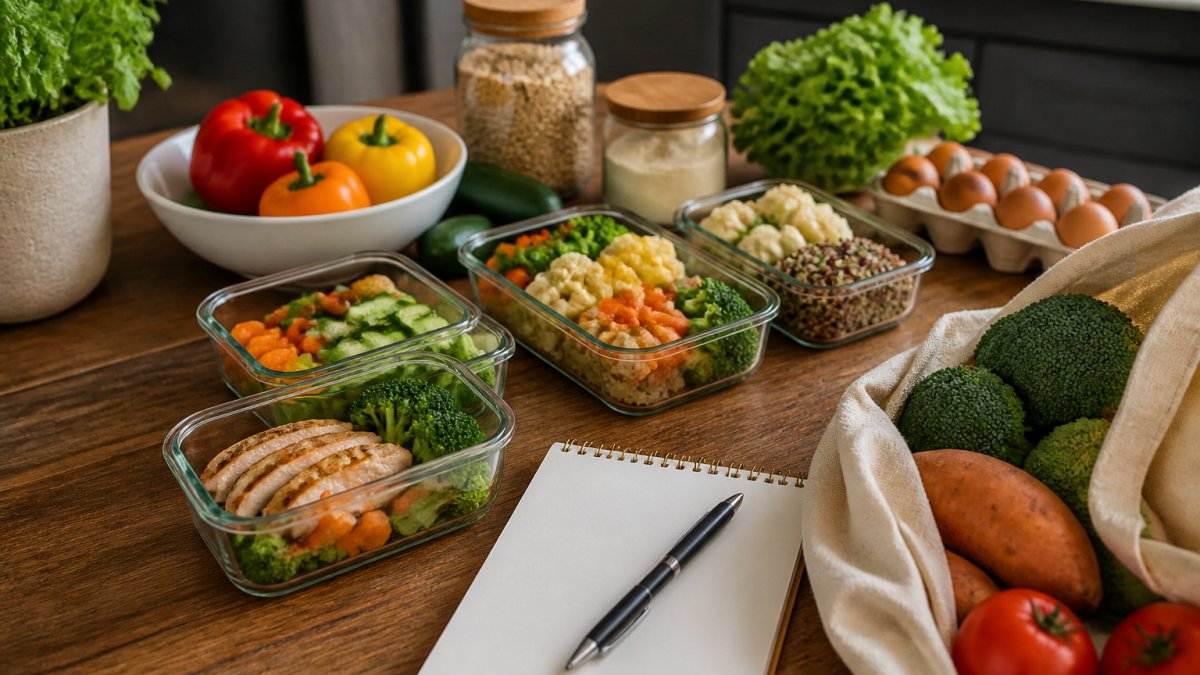
Meal prep for busy moms works best as light batch cooking, not a full Sunday marathon. Cook one protein, one grain, and chop two vegetables. That's enough to make three weeknights easier.
Advance preparation pays off in small moves:
- Cook a double batch of ground turkey or chicken and store half for later in the week
- Wash and cut produce right after grocery shopping
- Cook a pot of rice or pasta to reheat as a side
- Pre-mix spices for two dinners in small bowls
Batch cooking doesn't mean prepping every meal in advance. It means removing the slowest step from your busiest nights. A common mistake is over-prepping on Sunday and wasting food by Thursday. Prep only what you'll eat within four days.
Quick Dinner Ideas for Families When the Schedule Changes
Quick dinner ideas for families exist for exactly this reason: the schedule changed and the plan didn't. Keep a short list of 15-minute fallbacks on the fridge door so nobody has to think.
Good fallback meals use what you already stock:
- Breakfast-for-dinner: eggs, toast, fruit
- Quesadillas with leftover protein and cheese
- Pasta with jarred sauce and frozen vegetables
- Sheet-pan sandwiches with whatever deli meat is open
- Rice bowls built from leftovers
These aren't failures. They're part of the plan. When you build two open nights into every week, a schedule change just fills a slot you left open.
Use a Meal Planning Printable to Build Your Shopping List
A meal planning printable turns your week into a shopping list in one pass. Paper works better than an app for many moms because it stays visible on the counter.
The format matters more than the tool. A good printable has:
- Seven dinner slots with a swap column
- A pantry check box for each meal
- A grocery list grouped by store section
- A leftovers row so nothing gets forgotten
Write your list in the order you walk the store: produce, meat, dairy, center aisles. That alone cuts a typical trip down by several minutes of backtracking.
Make Your Flexible Meal Plan Work for Picky Eaters and Dietary Needs
Picky eaters and dietary needs don't break a flexible plan.
The approach that works: build each dinner as a base plus add-ons.
- Base: rice, pasta, tortillas, or potatoes
- Protein: keep one option plain for picky eaters
- Vegetables and sauce: served on the side so each person chooses
For allergies and dietary needs, mark safe swaps directly on the plan. Gluten-free pasta in place of regular. Dairy-free cheese for one family member.
The thing nobody tells you about picky eaters: repeated exposure works better than pressure. Keep one familiar food on every plate and let the rest be optional.
The modular dinner method
A modular dinner is one meal that can be assembled differently at the table without cooking a second dinner. The trick is to cook the components separately and let each person build their own plate.
Take a taco night as an example. Instead of seasoning all the meat at once, brown the ground turkey plain, then set aside a portion for the picky eater before adding seasoning to the rest. Warm tortillas, set out cheese, lettuce, salsa, and beans in separate bowls.
The same structure works for:
- Rice bowls: cook rice plain, set out proteins, sauces, and vegetables separately
- Pasta night: keep sauce on the side, offer gluten-free pasta cooked in a separate pot
- Sheet-pan dinners: roast vegetables and protein on separate sides of the pan, sauce at the table
- Baked potato bar: potatoes, cheese, broccoli, chili, and sour cream in separate bowls
A substitution chart you can write on your plan
Keep a short list of swaps taped inside a cabinet door. The goal is to make the swap automatic, not a nightly negotiation.
| Instead of | Try |
|---|---|
| Regular pasta | Gluten-free pasta (cook in a separate pot) |
| Cow's milk cheese | Dairy-free cheese or nutritional yeast |
| Flour tortillas | Corn tortillas |
| Breaded chicken | Grilled or baked chicken |
| Peanut sauce | Sunflower seed butter sauce |
| Soy sauce | Coconut aminos |
Handling a mixed-preference household without cooking twice
The most common pattern in a household with different needs is not "one person is allergic and everyone else eats normally." It's a mix: one child is dairy-free, one adult is cutting back on gluten, a toddler refuses anything green, and a teenager eats everything. Cooking four separate dinners is not sustainable.
The modular method solves this because the base and the plain protein are shared. Only the add-ons differ. That means the actual cooking time stays the same, you're just plating differently.
A few practical rules that make it stick:
- Write the swap on the plan, not in your head. If Thursday is taco night and one child is dairy-free, write "no cheese, dairy-free on side" next to Thursday.
- Keep one safe food on every plate. A roll, plain rice, or a piece of fruit. Nobody leaves the table hungry because the main dish wasn't their favorite.
- Offer new foods next to familiar ones, not instead of them. Repeated exposure works better than pressure, and a flexible plan gives you more chances to offer without a power struggle.
- Let kids assemble their own plate when they're old enough. A 6-year-old who builds their own taco is more likely to eat it than one who's handed a pre-made plate.
Start Your First Flexible Meal Plan This Week
Start small. Pick five dinners for next week, leave two nights open, and check your kitchen before you shop.
The first week is the hardest. By the third, the routine takes ten minutes and the 6 p.m. panic fades.
Saltwater Mom Life provides budget-friendly, prep-focused digital meal plans designed specifically for busy families. Our comprehensive weekly guides include curated recipes and organized shopping lists to simplify your kitchen routine.
Get started with Saltwater Mom Life and put a flexible plan on your fridge this week.
Frequently Asked Questions
How do busy moms plan meals for the week without spending hours?
Keep it to a 10-minute routine: check the fridge, freezer, and pantry, pick four or five dinners, and build a shopping list from what you already have. A weekly meal plan for busy families works best when it takes less time than deciding dinner each night.
What is a flexible meal plan and how is it different from a strict one?
A flexible meal plan is a short list of dinner options for the week, not a locked schedule. You plan five or six meals, leave one night open, and build in swaps like moving taco night to Thursday if practice runs late. Flexible meal plans for busy moms keep the decision made without punishing you when the week changes.
How can I meal plan when my schedule changes every week?
Plan by category instead of by day. Choose a pasta night, a sheet-pan night, a slow-cooker night, and a leftovers night, then assign them when you know your week. Keep two backup quick dinner ideas for families on hand, such as eggs for dinner or quesadillas, so an unexpected late meeting does not turn into takeout.
How do I make a meal plan that works for picky eaters?
Build meals around a base everyone accepts, like rice, pasta, or tortillas, and serve toppings and sauces on the side. Plan one familiar meal and one new recipe each week rather than overhauling the menu. If you are meal prep for busy moms with mixed preferences, prep components separately so each person can assemble a plate they will eat.